Understanding Live Vaccines and Vaccine Shedding


Vampire Bacteria? Scientists Uncover Blood-Hunting Behavior In Common Bacteria

Researchers at Washington State University have identified a "bacterial vampirism" where deadly bacteria feed on human blood serum, offering new insights into bloodstream infections and potential treatments for at-risk individuals. (Artist's concept.) Credit: SciTechDaily.Com
Some of the world's deadliest bacteria seek out and feed on human blood, a newly discovered phenomenon researchers are calling "bacterial vampirism."
A team led by Washington State University researchers has found the bacteria are attracted to the liquid part of blood, or serum, which contains nutrients the bacteria can use as food. One of the chemicals the bacteria seemed particularly drawn to was serine, an amino acid found in human blood that is also a common ingredient in protein drinks.
The research finding, published in the journal eLife, provides new insights into how bloodstream infections occur and could potentially be treated.

Washington State University researcher Arden Baylink holds a petri dish containing salmonella bacteria. Baylink and PhD student Siena Glenn have published research showing that some of the world's deadliest bacteria seek out and eat serum, the liquid part of human blood, which contains nutrients the bacteria can use as food. Credit: Ted S. Warren, Washington State University College of Veterinary Medicine
Bacteria Studied and Experimentation"Bacteria infecting the bloodstream can be lethal," said Arden Baylink, a professor at WSU's College of Veterinary Medicine and corresponding author for the research. "We learned some of the bacteria that most commonly cause bloodstream infections actually sense a chemical in human blood and swim toward it."
Baylink and the lead author on the study, WSU Ph.D. Student Siena Glenn, found at least three types of bacteria, Salmonella enterica, Escherichia coli, and Citrobacter koseri, are attracted to human serum. These bacteria are a leading cause of death for people who have inflammatory bowel diseases (IBD), about 1% of the population. These patients often have intestinal bleeding that can be an entry points for the bacteria into the bloodstream.

Siena Glenn, a Washington State University Ph.D. Student uses a high-powered microscope. Glenn, working with Assistant Professor Arden Baylink and colleagues, has published research showing that some of the world's deadliest bacteria seek out and eat serum, the liquid part of human blood. Credit: Ted S. Warren, Washington State University College of Veterinary Medicine
Using a high-powered microscope system designed by Baylink called the Chemosensory Injection Rig Assay, the researchers simulated intestinal bleeding by injecting microscopic amounts of human serum and watching as the bacteria navigated toward the source. The response is rapid — it takes less than a minute for the disease-causing bacteria to find the serum.
Potential for New TreatmentsAs part of the study, the researchers determined Salmonella has a special protein receptor called Tsr that enables bacteria to sense and swim toward serum. Using a technique called protein crystallography, they were able to view the atoms of the protein interacting with serine. The scientists believe serine is one of the chemicals from the blood that the bacteria sense and consume.
"By learning how these bacteria are able to detect sources of blood, in the future we could develop new drugs that block this ability. These medicines could improve the lives and health of people with IBD who are at high risk for bloodstream infections," Glenn said.
Reference: "Bacterial vampirism mediated through taxis to serum" by Siena J. Glenn, Zealon Gentry-Lear, Michael Shavlik, Michael J. Harms, Thomas J. Asaki and Arden Baylink, 16 April 2024, eLife.DOI: 10.7554/eLife.93178.2
The study was funded by the National Institute of Allergy and Infectious Diseases.
I Ignored These Common Symptoms After Returning From Vacation — It Almost Killed Me
Claudia Gill was only 18 when she came within hours of death as meningococcal attacked her body.
Two years on, the university student is warning everyone to beware of the symptoms.
After coming home from an extended holiday in Queensland, the New South Wales woman was struck with fatigue, her ears were very sensitive to sound and a ringing echoed in her head.
Her neck stiffened, she was vomiting and fainted.
The young woman was rushed to hospital and doctors figured out she had a potentially deadly meningococcal B bacterial infection.
Doctors told her had she arrived at hospital any later there was a good chance she would have died.
The attack happened frighteningly quickly. Family HandoutHer recovery took five nights in hospital, weeks of rest and slowly getting back into work and study. Two years on Ms. Gill gets more regular and intense headaches.
Once she was out of hospital she wanted to find the community of people who have had the disease, and learn about what attacked her body.
From there Gill started speaking with community and advocacy groups, and realised she would be a good test case for advocacy about the disease.
"It comes on so quickly … it was pretty scary," Ms Gill said.
Claudia Gill was hospitalized after her neck stiffened, she vomited, and fainted. Family HandoutShe wants people to be aware of the symptoms so they can act quickly should they suspect an infection.
Gill only got a minor rash, which tends to be a later symptom often associated with meningococcal.
The rash followed the progressively mounting light and sound sensitivity, stiff neck, nausea, stiff back, vomiting, and then a fully-stiff body and headaches.
"If I had the rash earlier then we would have acted earlier. But that's why it's so important to know all the symptoms," she said.
Start your day with all you need to knowMorning Report delivers the latest news, videos, photos and more.
Thanks for signing up!
Meningococcal is a type of bacteria which can enter your bloodstream and cause blood poisoning.
Vaccinations against the A, C, W and Y variants are free in Australia for newborns, 14-16-year-olds and people with asplenia and hyposplenia, complement deficiency and those receiving treatment with eculizumab.
Gill was struck with meningococcal B. The vaccine for this is free for people with the above immune conditions, as well as Aboriginal and Torres Strait Islander newborns.
Meningococcal deaths in Australia make news because of the widespread vaccine coverage we have, but also the rapid onset of the disease.
Meningococcal is a bacteria that poisons your bloodstream. Getty ImagesLast week a West Australian adult died from the disease, and two others were hospital; the cases were not linked but was the first fatality in the state since 2020.
Gill studies in Newcastle, but is originally from Wollongong.
It was in Wollongong in late 2022 that 23-year-old Brayden Chater became brain dead and died of meningococcal B. His condition deteriorated rapidly in the space of 24 hours, from feeling as if he had just a fever to convulsions and being unresponsive.
Doctors could not tell Gill where she contracted the bacteria.
Australia wide there were 143 lab confirmed cases of all meningococcal variants in 2023. Infections were most common in toddlers and 15 to 19-year-olds.
New South Wales had the most cases (36) last year, but the Northern Territory and South Australia had the highest occurrence per capita, about one case per 100,000 people.
So far in 2024 there have been 31 confirmed cases, with the most being South Australia's total of nine.
A New Class Of Antimicrobial Compounds Discovered In Soil Bacteria
Millions of people die every year from antibiotic-resistant infections or from the complications of those infections, and the problem is only expected to get worse as pathogenic bacteria continue to evolve and find new ways to evade the effects of drugs. As antibiotics become less effective, the race is on to find new molecules that can prevent or eliminate bacterial infections. Scientists have now identified a group of protein particles that have umbrella-like shapes, and have toxic effects on bacterial cells. These toxic proteins, which are produced by soil bacteria called Streptomyces as they battle their microbial competitors, have now been described in Nature.
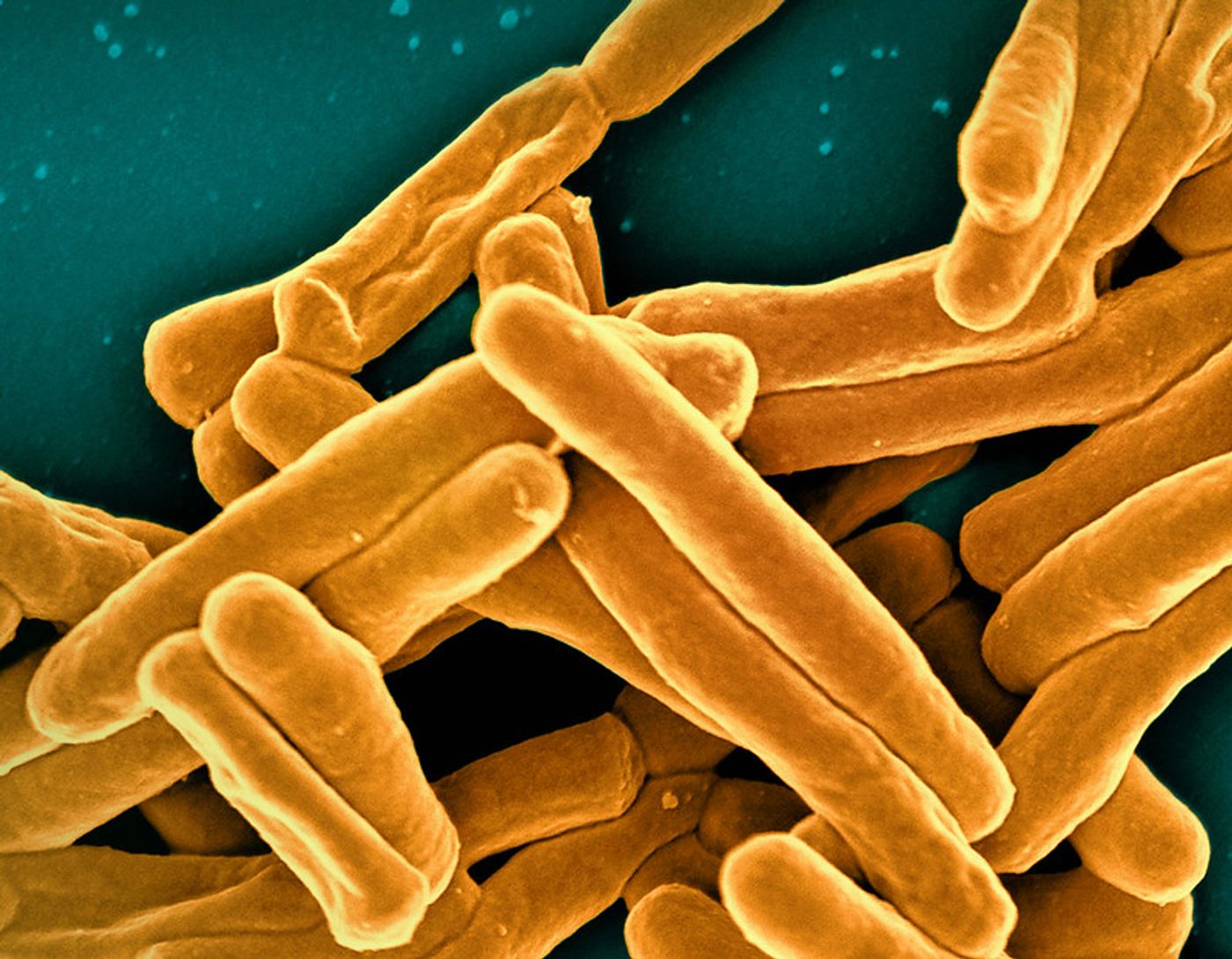
There are untold numbers of microbial species on our planet, and a kind of microbial arms race has been ongoing for ages. So bacteria themselves can be great sources of antibacterial compounds. Streptomyces bacteria are an excellent example - they are already known for generating the broad-spectrum antibiotic called streptomycin.
But these latest molecules are different, because they are not small molecules like other compounds found in Streptomyces. Instead, these novel molecules are huge complexes composed of multiple proteins, and are shaped like microscopic umbrellas. They also aim for their targets in highly specific ways, unlike broad-spectrum drugs. Their unique properties may have kept them from being discovered during 100 years of research on Streptomyces.
A bioinformatics screen first identified these umbrella toxin genes, and additional work showed that the proteins are part of a complex. The researchers used cryo-electron microscopy to analyze their structure.
"The shape of these particles is quite peculiar, and it will be interesting in future work to learn how their unusual morphology helps them eliminate target bacteria," noted corresponding study author Joseph Mougous, a professor at the University of Washington School of Medicine and a Howard Hughes Medical Institute investigator.
Next, the researchers searched for the targets of the umbrella toxins, and assessed their impact on a huge array of organisms including fungi and 140 types of bacteria. This effort showed that the toxins target other Streptomyces species specifically.
"We think this exquisite specificity may be due to the proteins that make up the spokes of the umbrella, which vary across the particles. These include proteins that might latch onto specific sugars found on the surface of competitor bacteria," noted study co-author S. Brook Peterson, a senior scientist in the Mougous lab.
After searching the genomes of thousands of other bacteria, the team determined that many other bacterial species make their own versions of umbrella protein toxins. All of these species have something in common as well: they all grow in an unusual way, with branching filaments.
There is still a lot more work to be done, but the researchers are hopeful that these toxins could be effective against the bacterial pathogens that cause tuberculosis and diphtheria, which also happen to be resistant to many front-line antibiotics.
Sources: University of Washington School of Medicine, Nature


Comments
Post a Comment